
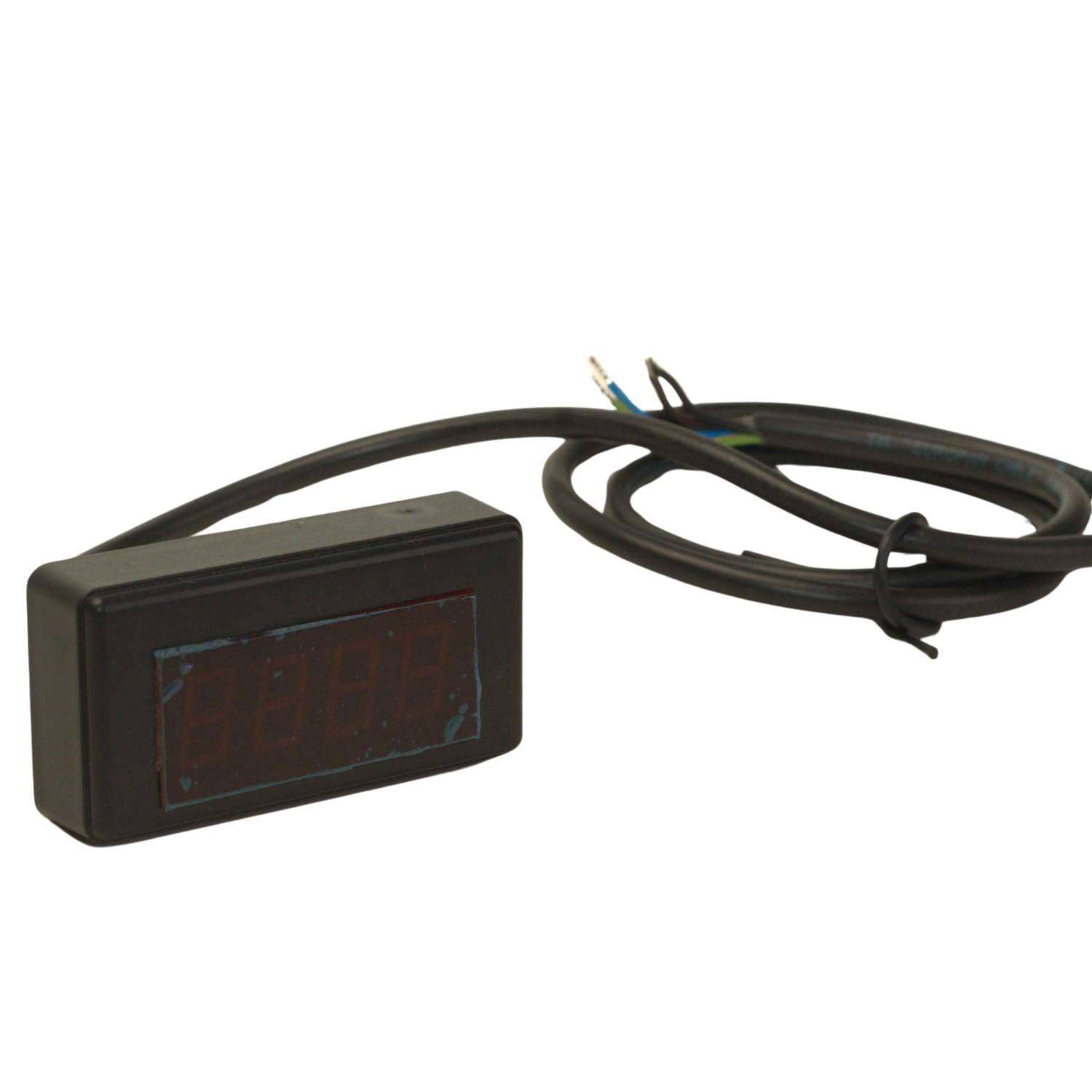
DIGITAL FUEL LEVEL INDICATOR
The Digital Fuel Level Indicator from Mercetech Innovations is a high-accuracy digital fuel monitoring solution designed to work seamlessly with fuel level sensors.
- Supports passive mode with external controllers.
- Functions independently in active mode.
- Displays volume in percentage (0.1% resolution).
- Indicates volume in liters (1 ml to 10 liters resolution).
- Easy-to-read digital display.

Key Features & Technical Highlights
1. Clear and Accurate Fuel Level Display
The Digital Fuel Level Indicator features a high-visibility 4-digit LED panel that displays:
- Fuel level in percentage format with 0.1% resolution
- Fuel volume in litres (with resolution from 1 ml to 10 litres depending on tank size) This ensures fuel data is immediately understandable and actionable for drivers and fleet operators alike.
2. Reliable RS-232 Interface with Standard Protocol
This indicator communicates with compatible fuel level sensors via a wired RS-232 digital interface using the EDE (LLS) protocol. The result is fast, stable data transmission and precise calculations of fuel volume values from the sensor input signals.
3. Dual Operation Modes – Passive & Active
- Passive mode: Works with external controllers or telematics systems that interpret fuel data
- Active mode: Functions independently to display fuel levels without external systems This flexibility allows easy integration with a wide range of telematics platforms and fleet management hardware.
4. High-Resolution Digital Data Processing
With support for 10-, 12-, and 16-bit data input, the indicator offers high-fidelity interpretation of sensor values, increasing the accuracy of readings especially in dynamic fuel usage scenarios.
5. Robust Performance in Extreme Conditions
Built for real-world applications, the digital fuel gauge operates reliably across a wide temperature range of -40 °C to +75 °C, making it suitable for vehicles, industrial equipment, generators, and outdoor installations.
6. Wide Operating Voltage & Low Consumption
With a flexible supply range of +9 V to +36 V DC and efficient current consumption (≤ 30 mA), this indicator can be used across automotive, heavy vehicle, and stationary fuel systems without requiring specialized power converters.
Applications – Where This Indicator Excels
Fleet Fuel Monitoring
Ideal for trucks, buses, and commercial fleets, this indicator provides drivers and fleet managers with instant fuel level insights for safer routing, optimized refilling schedules, and improved fuel economy.
Industrial & Generator Fuel Management
Use with fuel level sensors in stationary tanks, backup generator sets (DG sets), and industrial reservoirs to prevent unexpected fuel shortages, downtime, and overuse.
Telematics & IoT Integration
When paired with telematics platforms or tracking systems, the digital indicator enhances fuel data visibility and supports real-time remote monitoring, analytics, and alerting for anomalies like fuel drops or unexpected consumption.
Mobile Equipment & Heavy Machinery
This system supports rugged environments in construction, mining, agriculture, and logistics — providing dependable fuel level monitoring where precision and uptime are essential.
Why Choose Mercetech’s Digital Fuel Level Indicator?
Precision & Accuracy
By digitally processing sensor output and displaying fuel volumes with high resolution, this indicator helps businesses eliminate guesswork and reduce errors in fuel reporting.
Flexibility in Integration
With dual modes (active and passive) and a standard RS-232 interface, the indicator integrates easily with a wide range of fuel level sensors and telematics devices — whether in a truck dashboard, remote generator site, or fuel depot.
Tough & Reliable
Designed to withstand wide temperature variations and continuous operation, this indicator is built for years of dependable performance in diverse operating conditions.
Enhanced Decision-Making
Real-time fuel level insights help fleet managers, operators, and technicians make smarter operational decisions — reduce theft, prevent downtime, and optimize fuel usage.