

demo-attachment-1083-Mask-Group-4442@2x

Mercetech Innovations Pvt. Ltd. vs. Other Fuel Management Solutions

Mercetech vs Other Fuel Monitoring Solutions

Rising fuel costs, fuel theft, inaccurate records and limited visibility are major challenges for fleet owners, logistics companies, construction businesses and industrial operators.

Basic fuel tracking systems may only display fuel levels. Businesses need a complete fuel management system that provides accurate data, real-time alerts and actionable insights.

Mercetech Innovations Pvt. Ltd. offers advanced fuel monitoring solutions designed to help businesses control fuel consumption, prevent losses and improve operational efficiency.

Real-Time Fuel Monitoring

Mercetech solutions provide real-time visibility into:

  • Current fuel levels
  • Fuel consumption
  • Refuelling events
  • Sudden fuel drops
  • Abnormal fuel usage

This helps managers identify problems quickly instead of relying on manual records or delayed reports.

Fuel Theft Detection

Fuel siphoning, unauthorised draining and manipulated refuelling can silently increase operating expenses.

Mercetech’s fuel theft detection system helps identify sudden changes in fuel levels and generates alerts for suspicious activity.

When integrated with GPS tracking, businesses can also check the time and location of fuel events.

Accurate Fuel Data

Inaccurate fuel records make it difficult to compare fuel bills with actual consumption.

Mercetech fuel level sensors provide reliable data for:

  • Fuel consumption monitoring
  • Refuelling verification
  • Driver accountability
  • Vehicle performance analysis
  • Fuel cost reporting

Accurate information allows businesses to make better operational decisions.

Easy Integration and Scalability

Mercetech fuel monitoring technology can be integrated with compatible GPS tracking, telematics and fleet management platforms.

The solutions are suitable for:

  • Logistics and transportation fleets
  • Commercial trucks
  • Construction equipment
  • Mining machinery
  • Agricultural vehicles
  • Diesel generators
  • Industrial fuel tanks

Businesses can expand the system as their fleet and operational requirements grow.

Better Cost Control

Fuel theft, excessive idling, inefficient routes and poor driving behaviour can significantly increase operating costs.

A reliable fleet fuel management system helps businesses:

  • Reduce fuel losses
  • Improve fuel efficiency
  • Verify refuelling
  • Increase driver accountability
  • Reduce manual reporting
  • Improve fleet productivity

Customer-Focused Support

Mercetech supports businesses with solution selection, installation guidance, integration and technical assistance.

This helps companies implement fuel monitoring technology effectively and maintain reliable performance.

Why Choose Mercetech?

Mercetech combines accurate fuel level sensors, wireless connectivity and real-time monitoring to provide better visibility across fuel-powered assets.

Unlike basic tracking solutions, Mercetech focuses on complete fuel intelligence, including theft detection, consumption analysis, refuelling monitoring and operational transparency.

Conclusion

Mercetech Innovations Pvt. Ltd. provides smart and scalable fuel monitoring solutions for businesses facing rising fuel expenses, theft and inaccurate fuel records.

By combining real-time fuel monitoring, GPS integration, accurate sensors and intelligent reporting, Mercetech helps businesses protect fuel, improve fleet efficiency and achieve better cost control.
 

blog 5

What is a Fuel Sensor or Fuel Level Sensor?

Rising fuel costs, fuel theft, inaccurate manual records and unexplained fuel consumption are major challenges for fleet owners and businesses operating fuel-powered equipment.

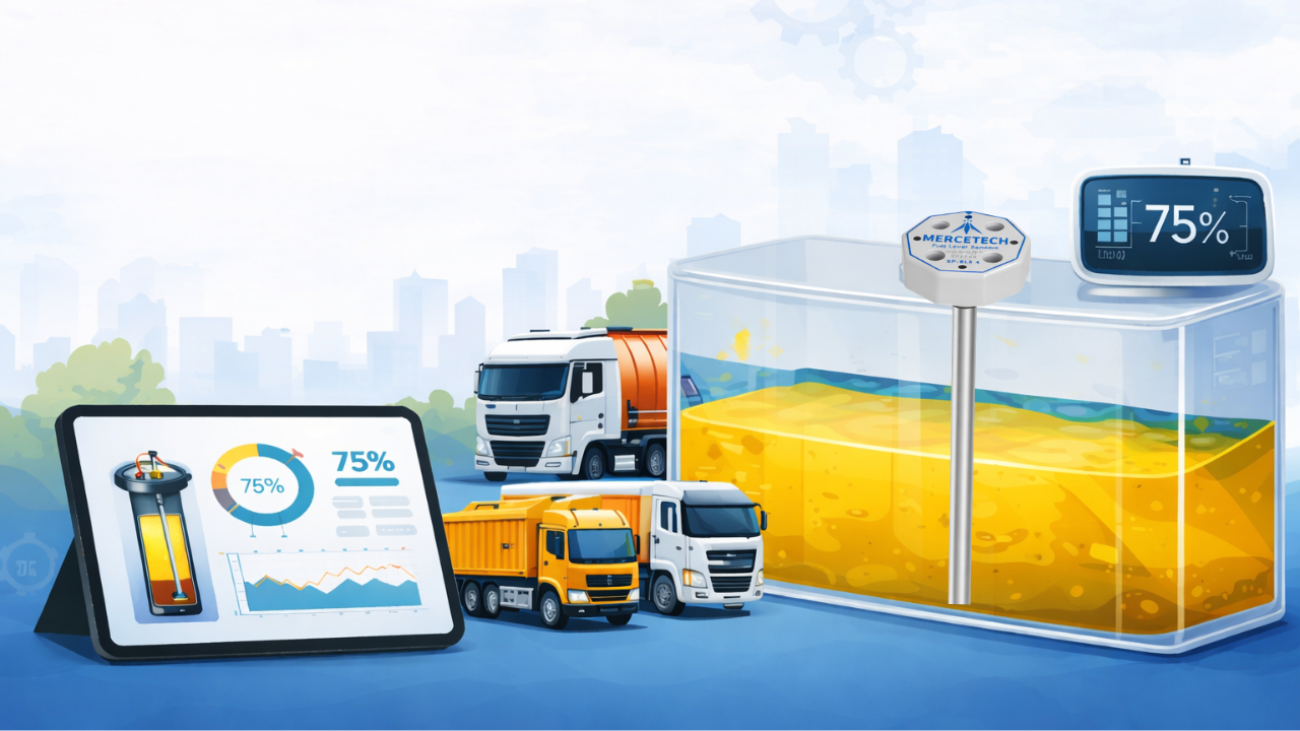
A fuel level sensor helps solve these problems by accurately measuring the amount of fuel available in a vehicle or stationary tank. It is commonly installed in trucks, buses, generators, construction equipment, agricultural machinery and industrial fuel tanks.

When integrated with a fuel monitoring system or GPS tracking platform, the sensor enables businesses to monitor fuel levels, consumption, refuelling and sudden fuel drops in real time.

How Does a Fuel Level Sensor Work?

A fuel level sensor is installed inside or outside the fuel tank, depending on the technology used. It continuously measures the fuel level and sends the information to a connected telematics or GPS platform.

Fleet managers can view the data through a web dashboard or mobile application to monitor the following:

  • Current fuel level
  • Fuel consumption
  • Refuelling events
  • Sudden fuel drainage
  • Possible fuel theft
  • Historical fuel usage

This provides greater visibility and reduces dependence on manual fuel records.

Types of Fuel Level Sensors

Capacitive Fuel Level Sensor

A capacitive fuel level sensor measures changes in electrical capacitance caused by the fuel inside the tank.

It is widely used in commercial vehicles and fleet fuel management because of its accuracy, stability and ability to provide continuous fuel-level data.

Ultrasonic Fuel Level Sensor

An ultrasonic sensor uses sound waves to measure fuel without directly touching it.

It is generally mounted outside the tank, making installation easier for certain applications.

Float-Based Fuel Sensor

A float sensor uses a floating component that moves as the fuel level rises or falls.

Although commonly used in standard vehicles, it may not provide the accuracy required for advanced commercial fleet monitoring.

Benefits of a Fuel Level Sensor

Accurate Fuel Tracking

Fuel sensors provide reliable fuel-level and consumption data, helping businesses identify unusual usage and improve fuel planning.

Fuel Theft Detection

A sudden drop in the fuel level may indicate leakage or unauthorised fuel drainage. A connected fuel theft detection system can generate an immediate alert.

Refuelling Verification

Sensor data helps fleet managers compare fuel receipts with the actual quantity added to the tank.

Improved Fleet Efficiency

Monitoring fuel consumption helps identify excessive idling, inefficient vehicles, poor driving practices and possible maintenance issues.

Reduced Fuel Costs

Accurate real-time fuel monitoring helps businesses control fuel waste, prevent theft and improve driver accountability.

Applications of Fuel Level Sensors

Fuel level sensors are widely used in:

  • Logistics and transportation fleets
  • Trucks and commercial vehicles
  • Construction and mining equipment
  • Diesel generators
  • Agricultural machinery
  • Industrial fuel tanks
  • Fuel storage depots

Conclusion

A fuel level sensor is an important part of a modern fleet fuel management system. It helps businesses monitor fuel accurately, detect fuel theft, verify refuelling and reduce unnecessary fuel expenses.

When integrated with GPS tracking, telematics software or a cloud-based monitoring platform, it provides real-time fuel data that supports better cost control, transparency and operational efficiency.