
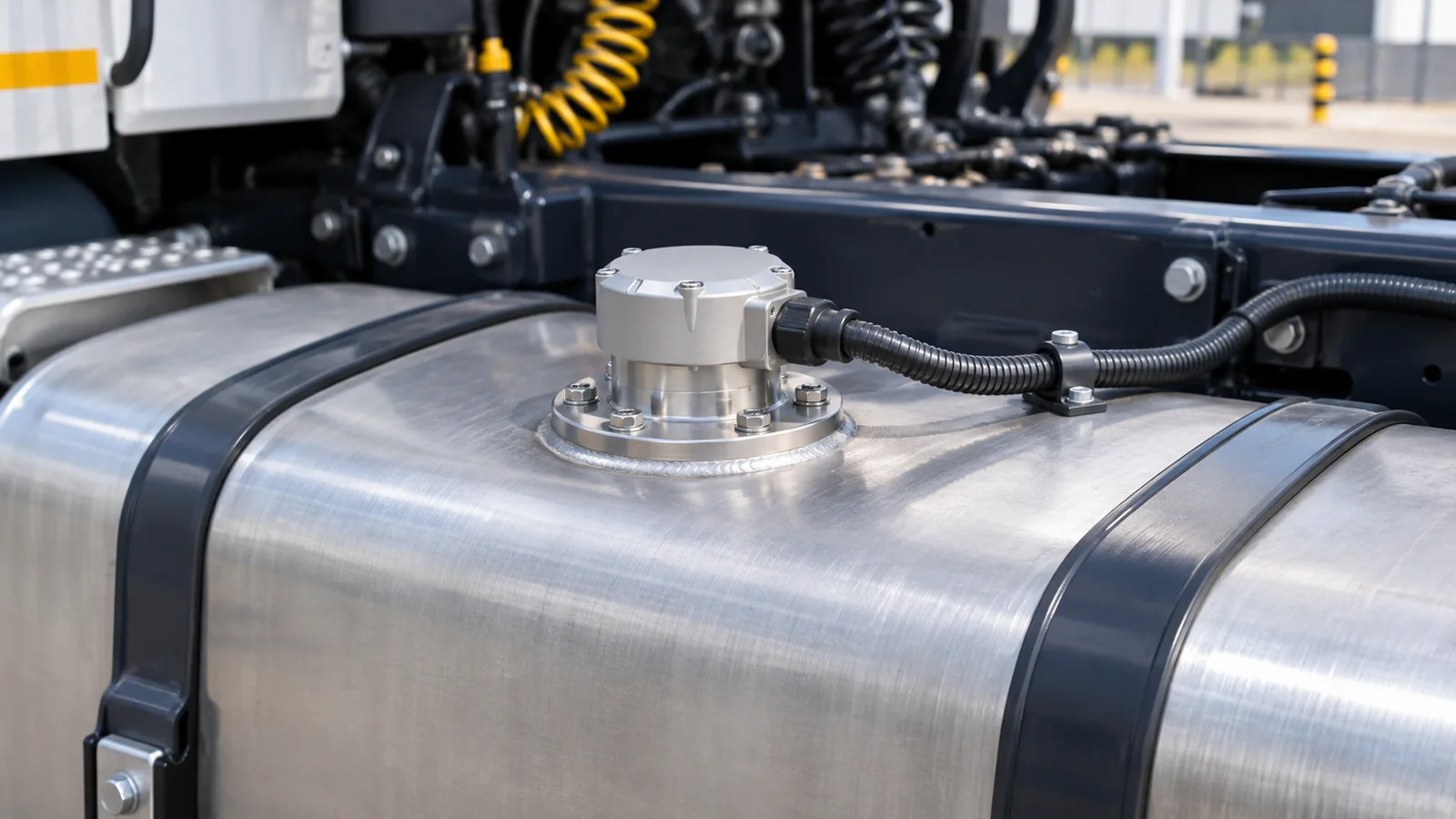
A fuel level sensor measures how much of a tank’s measuring range is occupied by fuel. When the reading is interpreted using a suitable tank calibration table, a connected system can display the estimated fuel volume in litres.
For fleet operators, this provides a way to review fuel availability, refuelling activity and changes during operation. The sensor is one component of the wider system: a compatible tracker or gateway and reporting platform are normally needed for remote fleet monitoring.
A fuel level sensor measures a physical condition in the tank, while the complete monitoring system adds location, timing and reports. Keeping those roles separate helps you ask precise questions when comparing a sensor with a complete fleet solution.
Contents
How does a fuel level sensor work?
The sensing element responds to the fuel level using a particular measurement technology. Electronics convert that response into a signal or digital value. The receiving device then passes the information to the software platform.
The data might represent a raw value, a level measurement or a calculated volume, depending on the setup. Before comparing sensors, confirm the output units and the way the tracker and software interpret them.
Fuel height alone does not describe volume in every tank. Curved sides and irregular geometry change how many litres correspond to each part of the measuring range. That is why calibration matters.
Common types of fuel level sensors
Capacitive fuel level sensors
A capacitive sensor detects changes in capacitance as the fuel level changes around its sensing elements. Suitability depends on the approved liquid, installation and product design.
These sensors are used in many diesel monitoring applications. The installed result depends on the tank, mounting, measurement range and calibration as well as the sensor’s stated specification.
Float-based fuel sensors
A float follows the liquid surface and changes the sender’s output as it moves. Many vehicle dashboard systems use this approach.
A dashboard sender may provide information useful for a driver without meeting every requirement of a detailed telematics project. Test its available data against the fleet’s reporting needs.
Ultrasonic and other measurement methods
Ultrasonic systems use sound measurements to determine level, with the installation arrangement depending on the product. Other technologies may suit particular liquids or tank designs.
Selection should be based on the actual application. Tank material, internal structures, approved fuels and access for installation all affect the decision.
Wired and wireless communication
A wired fuel level sensor may use a serial interface such as wired or RS232, or an analogue output, depending on the model. The receiving tracker must support the particular electrical interface and protocol.
A BLE fuel level sensor communicates with a compatible Bluetooth Low Energy receiver. This can reduce communication wiring between the tank sensor and tracker, but reception must be checked at the installed location. A BLE sensor is not automatically a cellular GPS tracker.
Compare the Mercetech SP-BLE 4 and SP-485 wired sensor against your existing equipment before specifying an integration.
Where fuel sensors are used
Common applications include commercial trucks, buses, construction machinery, mining equipment, diesel generators and stationary fuel tanks. The monitoring objective differs between them.
A truck operator may review refuelling and trip-related consumption. A generator operator may focus on remaining fuel and replenishment planning. A stationary tank installation may prioritise level history and transfer reconciliation.
What useful fuel monitoring can show
With suitable connectivity and software, sensor readings can support:
- Fuel-level history and remaining-fuel estimates.
- Review of refuelling events against receipts.
- Investigation of unusual increases or decreases.
- Consumption analysis over a defined period.
- Comparison between similar assets under comparable conditions.
Level measurement is different from a flow meter measuring fuel passing through a line. Consumption calculated from tank records also needs correct handling of refuelling, transfers, missing data and the reporting period.
Why calibration and installation matter
A correctly selected sensor can still produce misleading litre readings if the wrong tank table is used. Mounting conditions, tank geometry, unusable lower volume and communication settings also matter.
Use a qualified installer and preserve the commissioning record. Our fuel sensor calibration guide explains the difference between device reference settings and the installed tank table.
After commissioning, compare the displayed quantity with known fuel quantities at representative points. Investigate differences before using the report to make financial decisions.
Fuel level sensor: frequently asked questions
Can a fuel level sensor detect theft?
It supplies readings that can help identify unusual fuel loss. A compatible platform can flag an event, which should be checked against location, movement and operating records.
Can one sensor work with every GPS tracker?
No. Interface, protocol, firmware and platform support must match. Confirm the exact sensor and tracker combination.
How do I select a sensor for my fleet?
Contact Mercetech with the tank dimensions, fuel type, asset details and tracker model. Selection should begin with those requirements rather than a specification headline.
Before selecting a fuel level sensor, record the tank dimensions, intended fuel, vehicle use and tracking hardware. Use those details to confirm compatibility and plan a controlled installation and validation process.
For one implementation example, Teltonika documents how a supported analog fuel sensor connects to a tracker. Check the model-specific requirements for any digital or BLE setup. See the Teltonika analog fuel sensor documentation.
Follow a Fuel Level Sensor Reading from Tank to Report
A practical way to understand a fuel level sensor is to follow one measurement through the system. Start with the probe or sensing element, identify the receiving device and then find the value displayed by the platform. Record the units and the time associated with each stage.
Measurement and interpretation
The sensor responds to a physical condition related to fuel level. The system then interprets that measurement using the selected configuration. A tank table may be used to relate stable readings to known volumes. The correct relationship depends on the tank and installation rather than its nominal capacity alone.
Communication and reporting
A wired or BLE connection transfers information to compatible receiving equipment. The tracker or gateway must understand the supported data format. Remote reporting also depends on its upload connection and the selected software. A sensor does not independently establish that the entire path is working.
Operational use
Compare a documented refuelling event with the resulting report to check how the system represents a known change. Review unexpected changes with movement, location and maintenance records. This helps the team distinguish a question about the measurement from a question about interpretation or reporting.
When choosing a fuel level sensor, ask for the current model documentation and confirm the complete integration. The related guides below explain calibration, truck installation planning and the selection of a wider monitoring solution.
Related Fuel Monitoring Guides



Fuel Level Sensor Selection for African Applications
When choosing a fuel level sensor for a truck, generator or stationary tank in Africa, start with the fuel, usable tank depth, mounting position and receiving equipment. Compare wireless SP-BLE sensors with the SP-485 wired option against documented compatibility. Remote reports require the complete data path as well as the tank sensor.
Read the relevant project requirements: Northern Africa · West Africa · Southern Africa. Confirm product availability, delivery, local commissioning and support for the destination country in the quotation.
Choose Fuel Level Sensors for India, UAE/GCC and Africa
Fuel level sensor selection starts with the same essentials across these markets: fuel, tank geometry, mounting, receiving-device support and calibration. Compare wireless fuel sensors with the SP-485 wired fuel level sensor for the actual asset. Confirm current model documentation and destination-specific supply and support before ordering.
Choose the relevant buying guide: Fuel level sensors in India · Fuel level sensors for UAE and GCC projects · Fuel level sensors for African projects. Product availability, delivery and service scope are confirmed in the quotation for your destination.